Deep Exploration ——— Mathematics & Artificial Intelligence
My research projects cover multiple fields including deep learning, bioinformatics, computational mathematics, computer vision, and computational group theory
Deep BSDES: Solving Spherical Fokker-Planck and Feynman-Kac Equations
Lanzhou University · Prof. Weihua Deng (Distinguished Young Scholar) Research Group | Collaborative Advisor: Dr. Heng Wang
Led
AI for PDE
Deep BSDE Method
Spherical Geometry
Abstract: For high-dimensional partial differential equations under spherical geometric constraints, we employed a combination of deep learning and stochastic differential equations (BSDE) for numerical solution, addressing the curse of dimensionality in traditional methods.
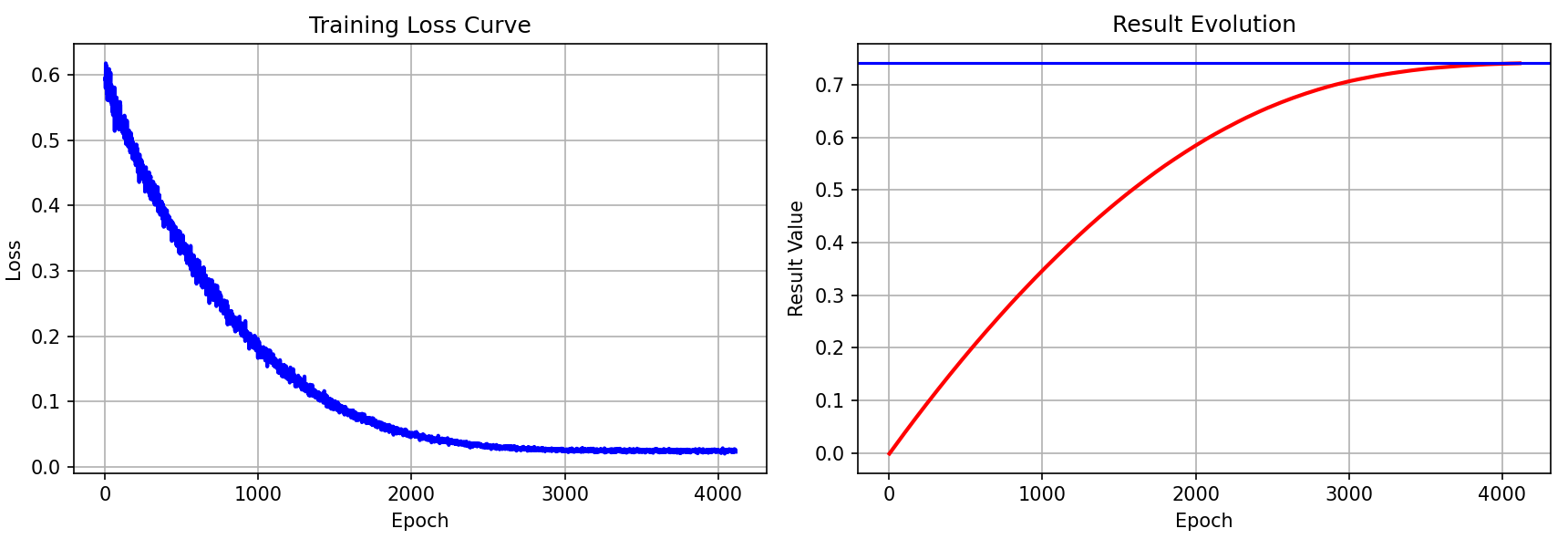
By improving the algorithm and adjusting hyperparameters, the model's loss function stably converged to the 1e-03 order of magnitude, with an absolute error of 0.0014 (relative error 5.7%).
To solve the problem of unstable convergence of the loss function, we proposed a spherical BSDE method, which doubled the convergence speed and made the loss function tend to be normally smooth.
Through comparative analysis, we verified the effectiveness of the BSDE method in solving PDEs.
Expected Outcomes:Academic paper at SCI Zone 2 or higher, GitHub open-source algorithm implementation
Theoretical Derivation
Derived BSDE for spherical Fokker-Planck and Feynman-Kac equations, and developed the spherical Deep BSDE theoretical method. By analyzing spherical geometric properties, the singularity problem was attributed to coordinate transformation.
Algorithm Implementation
Independently designed neural network architecture, implemented Monte Carlo algorithm, optimized training process, and improved computational efficiency.
Developed a parallel sampling algorithm to efficiently utilize GPU, increasing computational speed by more than 3 times while maintaining numerical stability.
Comparative Analysis
Systematically compared the Deep BSDE method with traditional numerical algorithms, verifying the superiority of the new method in high-dimensional problems. Numerical experiments were conducted on 10D, 20D, and 100D problems.
Results showed that the new method reduced computation time by 70-90% and memory usage by 40% while maintaining the same accuracy.
Loss Function Convergence Curve
Showing rapid convergence of the loss function during training
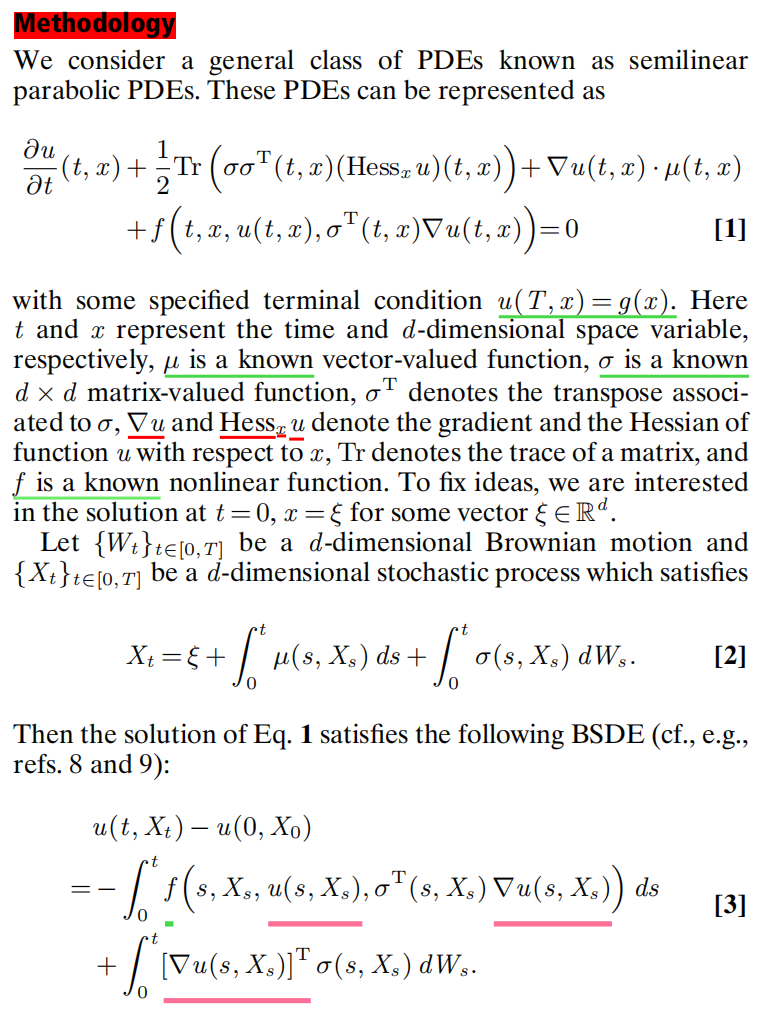
BSDE Original Analysis
Comparative analysis results with traditional methods
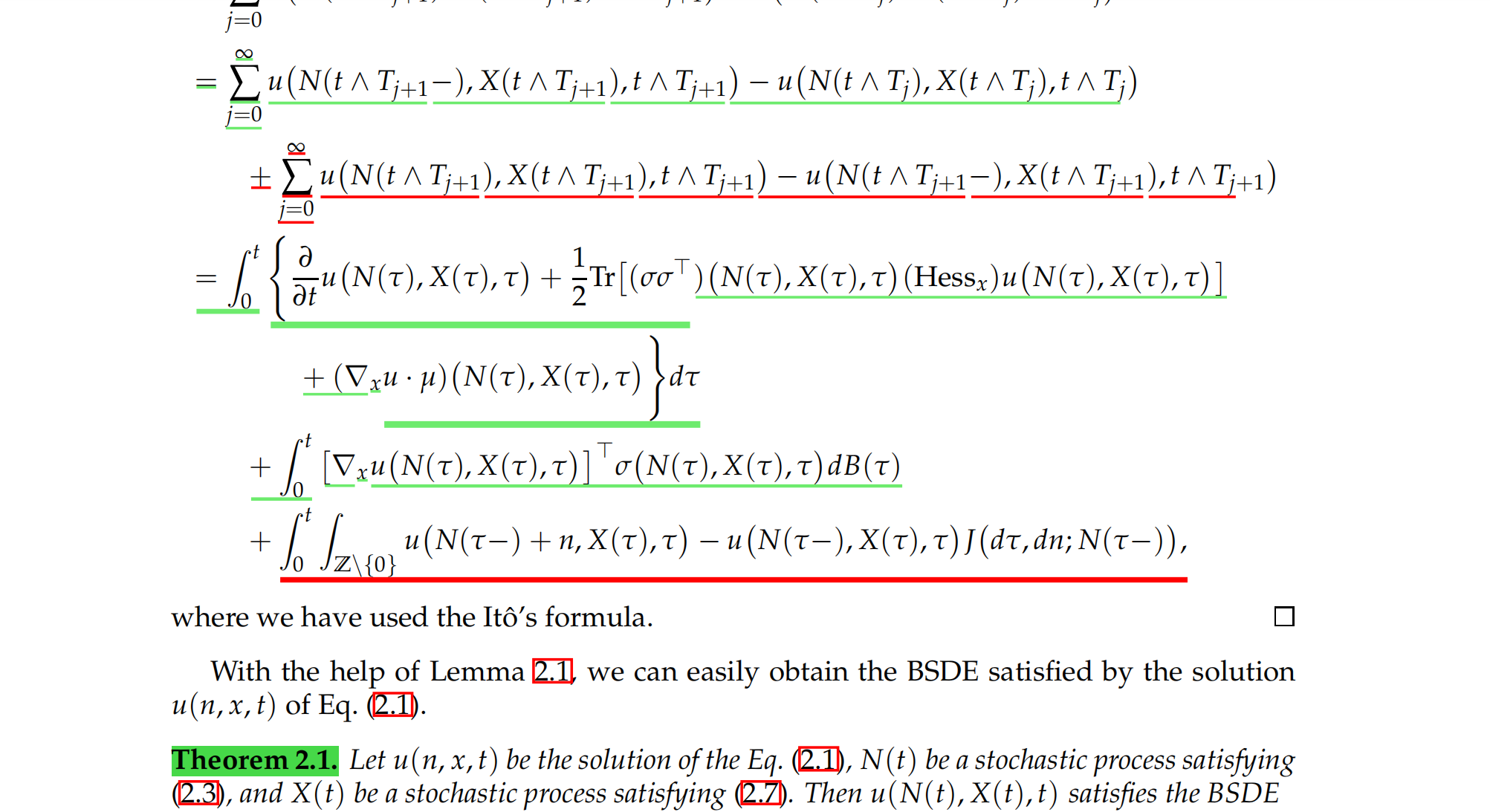
Proposed New Algorithm
Core architecture of the spherical Deep BSDE method
Self-built DL Framework
Neural network framework implemented based on PyTorch
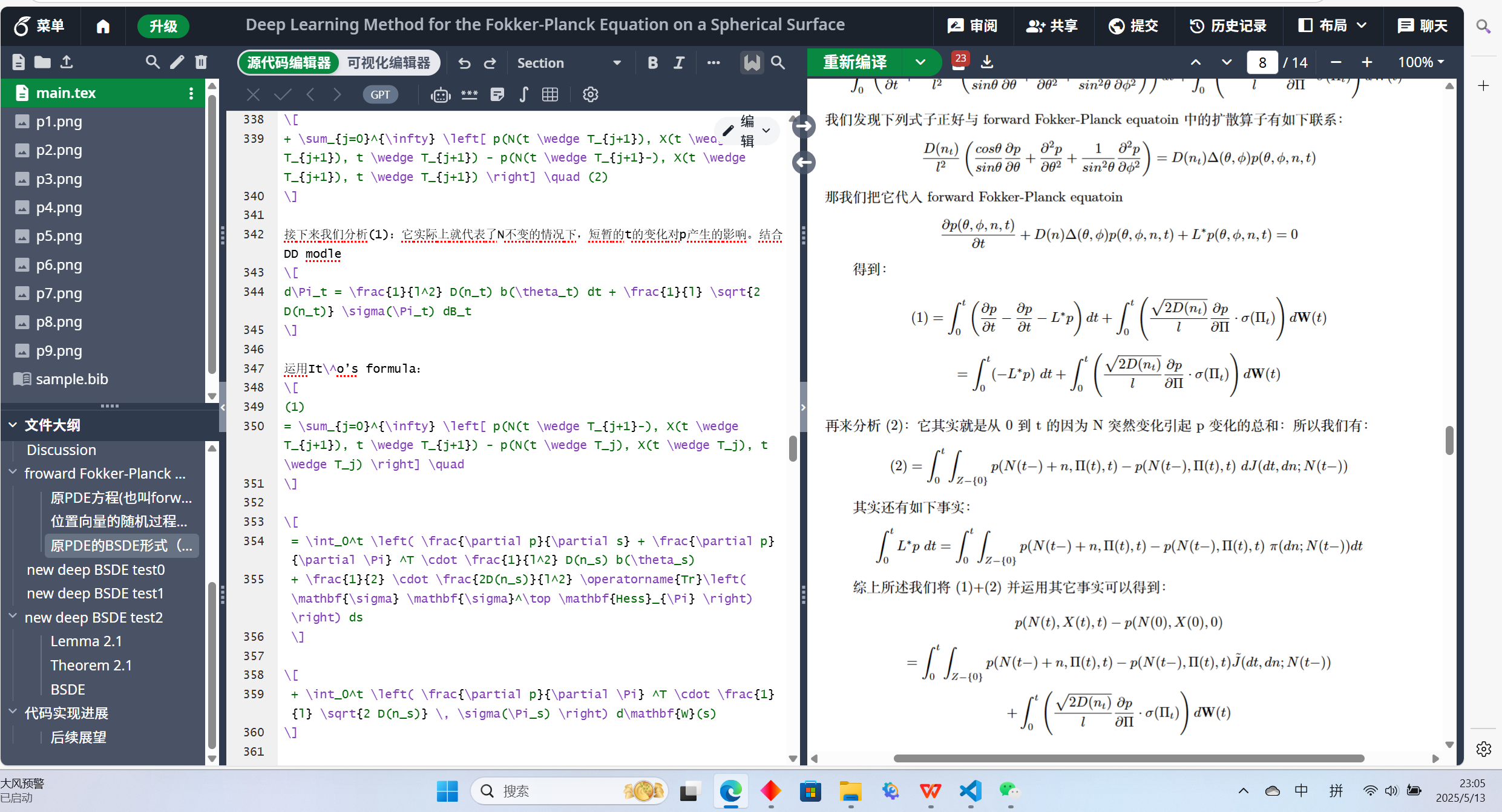
Latex Rendering
Theoretical derivations and formula presentations in the paper
Comparative Experiment Results
Performance comparison with traditional methods on multi-dimensional problems
MEDNA-DFM Model and XAI method: CAD & CWGA
City University of Hong Kong · Dr. Tianchi Lu Research Group
Bioinformatics
DNA Methylation Prediction
In silico Mutagenesis
Explainable AI
CWGA, CAD
Generating New Methylation Hypotheses
Abstract: Accurate computational identification of DNA methylation is essential for understanding epigenetic regulation. Although deep learning excels in this binary classification task,
its "black-box" nature impedes biological insight. We address this by introducing a high-performance model MEDNA-DFM, alongside mechanism-inspired signal purification algorithms. Our investigation
demonstrates that MEDNA-DFM effectively captures conserved methylation patterns, achieving robust distinction across diverse species. Validation on external independent datasets confirms that
the model's generalization is driven by conserved intrinsic motifs (e.g., GC content) rather than phylogenetic proximity. Furthermore, applying our developed algorithms extracted motifs with
significantly higher reliability than prior studies. Finally, empirical evidence from a Drosophila 6mA case study prompted us to propose a "sequence-structure synergy" hypothesis, suggesting
that the GAGG core motif and an upstream A-tract element function cooperatively. We further validated this hypothesis via in silico mutagenesis, confirming that the ablation of either or both
elements significantly degrades the model's recognition capabilities. This work provides a powerful tool for methylation prediction and demonstrates how explainable deep learning can drive both
methodological innovation and the generation of biological hypotheses.
Expected Outcomes:Academic paper at SCI Zone 1 Top or higher, Academic brand website, technical documentation, GitHub open-source model, fine-tuned model
Performance Breakthrough
Outperformed SOTA models on most standard datasets.
Achieved significant reduction in model complexity while maintaining high performance: parameter count reduced by 52%.
Architectural Innovation
Constructed the first FiLM+MoE Fusion model to achieve dynamic feature adjustment, combining lightweight Transformer experts and gating mechanisms for efficient feature fusion.
Innovatively introduced the DNABERT2 model, fine-tuned DNABERT2 and DNABERT-6mer to form a dual-feature framework.
Interpretability Analysis
Developed a multi-level interpretability analysis framework Bio-Prism, conducting interpretability analysis from three progressive levels: effect, decision mechanism, and biological significance connection.
Demonstrated the ability of new interpretability algorithms to deconstruct statistical information, derived biologically meaningful motifs, and in-depth analysis of a phenomenon inspired new verifiable biological hypotheses.
FiLM+MoE Fusion Architecture
Innovative model architecture design
Performance Comparison with Other Models
SOTA performance on multiple datasets
Feature Visualization Analysis
Feature representations learned by the model
Biological Interpretability Analysis
Verification of biological rationality of model decisions
Industrial Part Representation Recognition
Beijing Normal University-Hong Kong Baptist University United International College · Prof. Tieyong Zeng UIC Path Research Group
PointNet
Contrastive Learning
REQNN
3D Point Cloud Representation
Abstract: Addressing the recognition challenge of industrial 3D parts in disordered stacking scenarios, this project aims to improve the robustness of point cloud representation. Conducted in-depth research on cutting-edge point cloud contrastive learning,
to solve the rotation sensitivity problem in 3D space, innovatively introduced rotation-equivariant quaternion neural networks (REQNN),
achieving physically geometrically consistent feature extraction by reconstructing underlying operators, significantly enhancing the model's representation ability under arbitrary poses.
Core Outcomes:Proposed the use of REQNN underlying deconstruction to improve 3D point cloud rotation robustness
Cutting-edge Research and Architecture Design
In-depth study of point cloud-level contrastive learning paradigms, utilizing contrastive learning.
Addressing the limitations of traditional CNNs under 3D rotation, proposed the introduction of rotation-equivariant networks and scenario segmentation tasks to enhance the model's ability to understand part geometric structures.
REQNN Algorithm Implementation
Responsible for coding and environment configuration of underlying operators such as Quaternion Convolution.
Modified neural network weight matrices into quaternion form, enabling the feature extraction process to strictly satisfy 3D rotation equivariance, achieving the implementation from theoretical formulas to engineering code.
REQNN Network Architecture
Rotation-equivariant feature extraction network design based on quaternion algebra
3D Point Cloud Feature Visualization
Features extracted by the model remain highly consistent under different rotation angles
Robustness Test Results
After introducing REQNN, the model's recognition rate under arbitrary rotation poses significantly improved
Monoids of Orientation-Preserving Mappings on Finite Chains and Fixed Point Statistics
Lanzhou University · Prof. Wenting Zhang Research Group | Collaborative Advisor: Master Yang An
Computational Group Theory
Combinatorics
Semigroup Theory
Abstract: Based on the theoretical foundation of orientation-preserving mapping monoids on chains by Catarino & Higgins (1999), implemented algorithmic construction of Oₙ (order-preserving) and OPₙ (orientation-preserving) transformation semigroups.
Designed algorithms to calculate the fixed point distribution of mappings, conducted numerical verification and statistical analysis, and verified relevant algebraic inclusion relationships.
Finally, summarized statistical laws to facilitate the discovery of counting formulas.
Core Outcomes:Semigroup algorithm implementation and fixed point distribution calculation
Algorithm Design and Implementation
Utilized the itertools library to construct combinatorial iterators, efficiently generating the set of Oₙ order-preserving mappings on finite chains $X_n$.
Implemented the generation algorithm for OPₙ orientation-preserving mappings by constructing conjugate transformations using cyclic group generators.
Numerical Verification and Statistics
Batch calculated the number of fixed points of mappings for different values of n, verifying semigroup theoretical inclusion relationships based on results.
Summarized and analyzed statistical laws to facilitate the discovery of semigroup order formulas and fixed point distribution equalities.
Mapping Generation Algorithm
Generating Oₙ and OPₙ sets by combining theory with efficient libraries
Fixed Point Distribution Statistics
Numerical statistics of fixed point distribution for different orders n